5 Key Changes Under Decree No. 320/2026/ND-CP That Foreigners in Vietnam Should Know
Effective September 28, 2026, Decree No. 320/2026/ND-CP introduces several important changes to electronic identification and digital procedures for foreigners in Vietnam.
The new regulations expand access to electronic identification accounts, simplify the application process, shorten processing times, and allow more immigration-related documents to be integrated into the national identification application.
For foreigners who are living, working, investing, or staying legally in Vietnam, these changes may make administrative procedures more convenient.
Here are 5 key changes you should know.
1. More Foreigners Can Apply for an Electronic Identification Account
Under the previous regulations, foreigners generally needed to hold a Temporary Residence Card (TRC) or Permanent Residence Card in Vietnam to be eligible for an electronic identification account.
Under Decree No. 320/2026/ND-CP, the eligibility has been expanded.
Foreigners who legally enter or legally reside in Vietnam may apply for an electronic identification account if they wish to do so.
What does this mean?
Foreigners are no longer required to have a TRC or Permanent Residence Card simply to fall within the eligible group for an electronic identification account.
This is particularly relevant to foreigners who are legally staying in Vietnam but do not yet hold a long-term residence card.
2. The Previous Account-Level Classification Has Been Removed
Previously, electronic identification accounts for foreigners were divided into Level 1 and Level 2, with different requirements and corresponding procedures.
Decree No. 320/2026/ND-CP removes this level-based classification.
Eligible foreigners may apply for an electronic identification account without the previous distinction between levels.
This change is intended to simplify the process of obtaining and using electronic identification services for foreigners in Vietnam.
3. The Application Procedure Is Clearly Defined
Foreigners who wish to obtain an electronic identification account must visit the immigration management authority of the provincial-level Police, present their passport or other valid international travel document, and provide the required information using Form TK01.
The receiving authority will:
- Collect facial images and fingerprints;
- Verify the applicant's information against the National Immigration Database;
- Provide guidance on installing and using the national identification application.
The result will be notified through the national identification application, the applicant's registered mobile phone number, or email address.
For foreigners under 14 years old, the procedure must be carried out with the participation of their legal representative or guardian as required.
4. Shorter Processing Time
Another important change is the reduction in the processing time for electronic identification accounts.
The processing period depends on whether the applicant's biometric information is already available in the National Immigration Database:
| Biometric information | Processing time |
|---|---|
| Facial image and fingerprints already available | No more than 2 working days |
| Facial image and fingerprints not yet available | No more than 5 working days |
Previously, the processing time for a Level 2 electronic identification account was 3 or 7 working days. The new regulation therefore reduces the corresponding periods to 2 or 5 working days.
For foreigners who need to use digital identification for administrative procedures, this can make the process considerably more convenient.
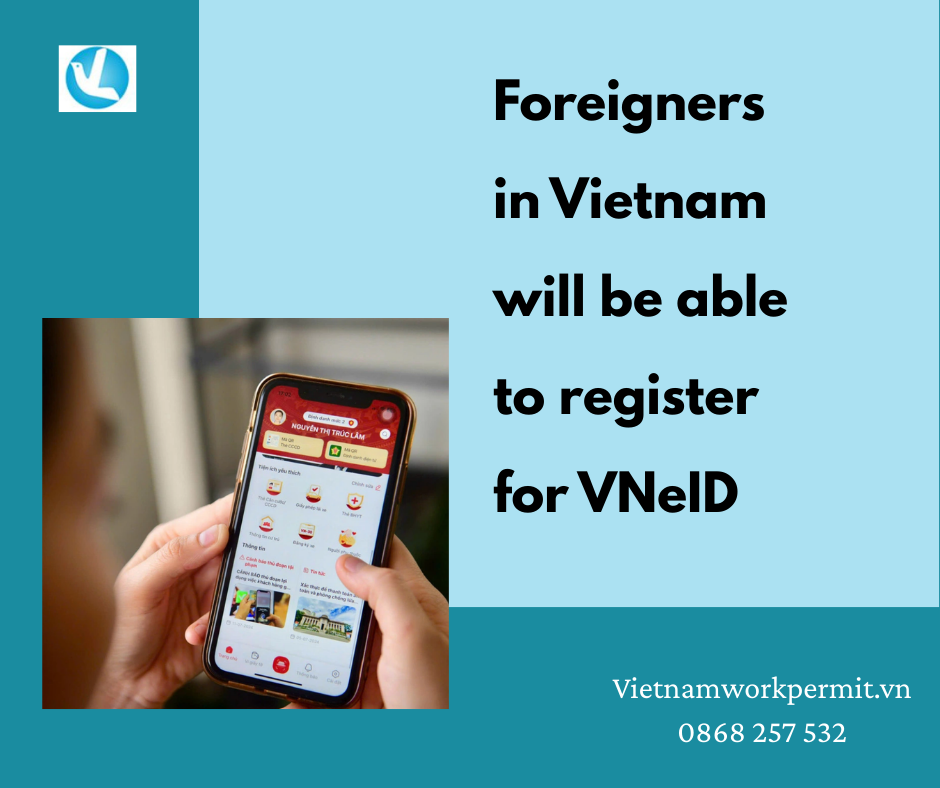
5. More Immigration Documents Can Be Integrated into the National Identification App
Decree No. 320/2026/ND-CP also expands and improves the rules concerning the updating, sharing, and use of information and documents within the electronic identification system.
For immigration-related matters, the documents that may be integrated or updated include:
- Ordinary passports;
- Visas;
- Visa exemption certificates;
- Permanent Residence Cards for foreigners;
- Temporary Residence Cards (TRCs) for foreigners.
An important point is that when handling administrative procedures, public services, or other transactions, authorities and relevant organizations are responsible for using information and documents already integrated into the national identification application.
According to the new regulations, individuals and organizations generally should not be required to submit or present the original or copies of documents that have already been integrated, unless the information cannot be accessed or verified, or another law provides otherwise.
What Should Foreigners in Vietnam Know From September 28, 2026?
From September 28, 2026, foreigners who legally enter or legally reside in Vietnam may apply for an electronic identification account if they wish, without the previous level-based classification.
The key changes can be summarized as:
More eligible foreigners → Simpler procedures → Shorter processing times → More integrated immigration documents
For foreigners who are working, investing, or living in Vietnam, these changes may make it easier to handle administrative procedures and access public services digitally.
Conclusion
Decree No. 320/2026/ND-CP represents another step toward digital transformation in Vietnam's immigration and administrative procedures. The new rules expand access to electronic identification, improve data connectivity, and reduce the need to repeatedly provide physical documents.
If you are a foreigner working, investing, or residing in Vietnam and need assistance with a Vietnam Work Permit, Temporary Residence Card (TRC), visa, or other immigration procedures, contact giaypheplaodong.com.vn for support based on your specific circumstances.
🌐 giaypheplaodong.com.vn
📞 Hotline: +84 868 25 75 32
📩 Email: [email protected]